The tariff is changing.
For decades, the tariff has defined energy for customers and utilities. It has been the product: what customers buy, what suppliers charge – the main mechanism through which liberalized utilities compete.
Now, facing diminishing value and rising churn, the rate itself is becoming a weaker source of margin and differentiation.
Leading utilities want to move to personalized, AI-enhanced, quick-to-launch propositions that scale customer value and support broader business aims, but first they need the right systems in place.
The value of standard tariffs is diminishing
- Total value in B2C energy retail from traditional tariffs will shrink 10% by 2035 (by around 1% each year) – it won’t be as lucrative to compete on tariffs alone (McKinsey)
- Churn averages 12–15% in Europe (Prospeo)
- There is growing pressure from customers, and regulations, for tariffs designed for new technologies, bundled tariffs, and more bespoke, personalized offerings.
Rethinking the tariff value proposition
Competing on rate alone is no longer enough. Value for customers and utilities is moving towards capabilities around the tariff that can support broader business aims.
- Personalisation
- Flexibility
- Asset optimisation
- Bundled services
- Automation
- Cost-to-serve
- Faster experimentation
The growth of connected grid devices and real-time data enables customers and utilities to benefit from a new wave of powerful AI-enabled smart optimizations.
Play 1: Putting flexibility at the core of your products
What’s broken?
Tariffs that treat energy like a simple rate leave value on the table.
Customers and regulators want modern propositions shaped around customers and their devices.
Reframing
Smart tariffs can turn the value afforded by flexible energy usage into better, more attractive deals for customers and a better proposition for utilities.
What good looks like
Smart tariffs can turn the value afforded by flexible energy usage into better, more attractive deals for customers and a better proposition for utilities.
Offerings designed around customers and their smart devices:
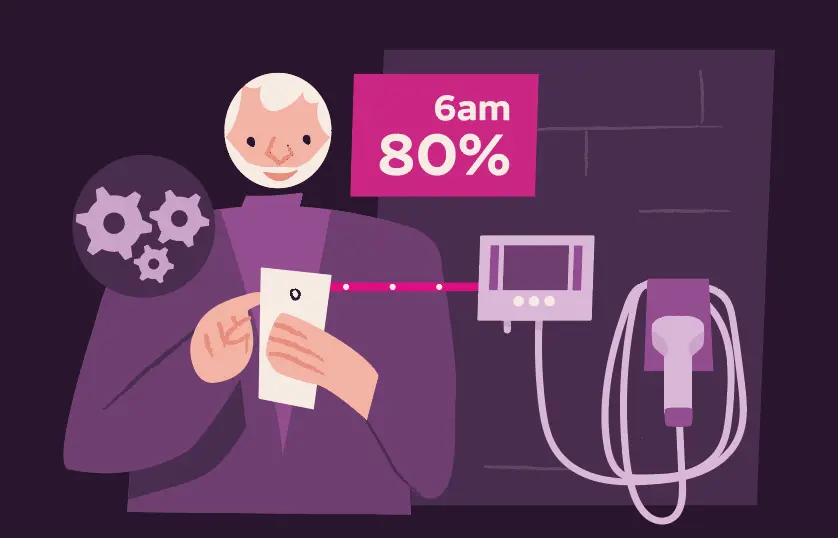
- EV tariffs that automatically optimize for charging with cheaper, cleaner energy.
- Batteries that optimize grid import and export.
- Heat pumps that shift heating outside of demand peaks.
- Tariffs that maximize value with AI-powered optimizations.
EVs, batteries, solar and heat pumps don’t just simply change how much energy a customer uses, but when they can use it and how much that energy is worth. This paves the way for intelligent load-shifting during low-cost periods, which reduces grid balancing, infrastructure, and energy costs felt by customers and utilities alike.
Building flexibility into tariffs unlocks robust new revenue streams, enabling customers and utilities to take part in grid balancing services, improving today’s slim tariff margins.
Case study: E.ON Next
“Residential Flexibility is really part of a strategy about completely pivoting how our business works.”
Steve Davies, E.ON Next Director of Strategy.With more households adopting EVs, solar panels, home batteries and other low-carbon technologies, E.ON Next was seeing a huge shift in how customers wanted to manage their energy. Using Kraken, they were able to launch a Residential Flexibility offering with Kraken in April 2025 and within 12 months, were trading flexibility at scale. The residential flexibility program has grown into a core part of E.ON Next’s offering, helping teams to roll out a range of new propositions.
Empowering utilities to build the next generation of tariff offerings
Today, tariff value depends on how quickly, safely and effectively suppliers can turn market signals, customer data and new consumer tech into working customer propositions. Yet launching new propositions is often slow (taking months) and expensive (costing millions of dollars).
Utilities want smarter propositions that can harness real-time data for orchestration and optimization, but struggle because they are working with disjointed platforms and messy data, which limits self-serve and complicates processes.
AI is empowering utilities to build and support more complex tariffs, faster but it needs strong, clean, unified data foundations in order to act reliably and effectively.
Fortunately, thanks to the next generation of unified, AI-powered utility tech platforms, solutions are at hand.
Play 2: Reducing Smart Tariff Complexity
What’s broken?
Tariff management is becoming a commercial capability, rather than a backend task. In order to meet demand for these products, utilities must be able to manage them, but management is frustrated by disjointed tech stacks and convoluted data.
- Tariffs span disjointed systems with no clear source of truth
- Data has to be transferred between disparate platforms such as billing, metering (MDM), and customer information systems (CIS), customer management (CRM) and device management (DERMs), creating gaps and latency.
- Pricing logic often sits across multiple spreadsheets
- Messy data keeps utilities from leveraging AI when building, updating and managing tariffs for their customers
- The product book explosion
- Duplication across systems from repeat building means every tariff becomes a separate item, even if they have similar charges, eligibility conditions, and rates
- This makes it harder to understand what products are active & where
Reframing
Products should be centralized in one system and only created once. This is much easier than reconciling data across multiple platforms, and integrations that require separate definitions. Utilities can then minimize complexity by building and varying tariffs using standardized, reusable components, rather than through replication and alteration.
- Use product templates based on standardized building blocks (template elements, or ‘definitions’):
- Charges (e.g. consumption charges)
- Eligibility rules
- Characteristics (facts about a supply point or account which are used to vary rates – e.g. postcode or meter capacity)
- Contract terms (e.g. contract lengths and termination fees)
- Time-of-use periods,
- Customer attribute fields
Having a centralized source of truth for products – supported by a clear, unified data foundation – also enables AI agents to work reliably and effectively, driving innovation and further streamlining product rollout, management, and leverage.

What good looks like
A unified operating system opens the door to streamlined tariff building, management, and variation.
- One base product should feed multiple offers.
- Regional differences and other customer variations represented as rules, not separate builds, avoiding catalogue bloat.
- Pre-made product building blocks ensure consistency across base tariff elements and increase speed-to-launch.
- Controlled changes flow down to impacted products, reducing manual effort and human error involved in updating individual items with pricing changes, for example.
- Clean data (and clear guardrails) empower AI agents to carry out actions for your customers, answering billing queries, resending bills or changing direct debits associated with smarter tariffs, for example.
Case study: Essential Energy
Essential Energy improved efficiency by 30% thanks to Kraken’s intelligent automations.
- Changes in one tariff were automatically replicated across the board, removing the need to manually update the billing system (previously 20 mins per change)
- Essential saved 3,000 business days of work for tariff changes across 74,000 meters.
Play 3: Make control the source of speed
What’s Broken:
- Building, managing and understanding tariffs across disjointed platforms, with messy underlying data, currently means relying on manual coding, engineering queues, and often external software engineers and third parties. This leads to expensive external contracts, slower progress, higher risk, and a lack of transparency, as knowledge is concentrated outside utilities themselves.
- Tariff launches are slowed by manual checks and testing across multiple systems, involving third party experts (billing validation often takes longer than designing the tariff itself).
Reframing
Self-service with internal product configuration tools allows teams to build and update tariffs without relying on external specialists.Speed and governance don’t need to be a trade-off. Embedding governance enables faster launches, and routine changes. Utilities should differentiate between:
- Standard/pre-approved changes
- Changes needing further review
- High-risk changes requiring senior sign-off
What good looks like
Bring the lion’s share of tariff design and management in house. A holistic, modern tech stack should unify customer management, device optimization, and product design within the same operating system, reducing the need for work across different platforms. This paves the way for in-house tools that operate across previously siloed systems, reducing the need for manual coding, engineering, and third party expertise, making building and managing tariffs in-house intuitive and simple.
- Utility self-service for routine changes
- Pre-approved templates and pricing logic enable tweaks to be made quickly
- Role-based permissions and streamlined, automated approval processes
- Easy rollbacks and versioning to mitigate errors
Case study — Solar Sharer Tariff:
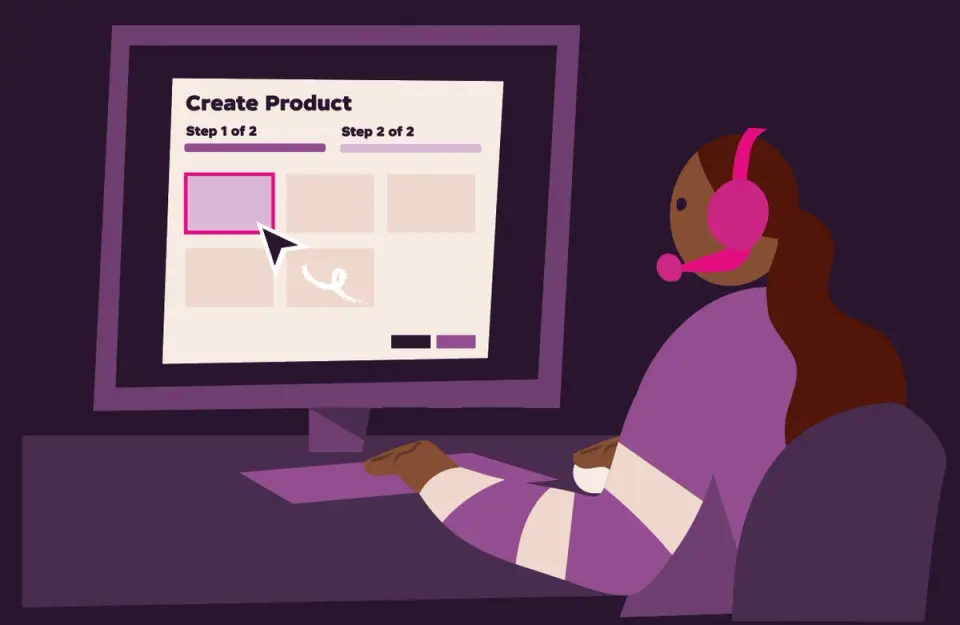
Kraken’s Australian clients were able to use Kraken’s built-in Product Studio to rapidly build a solar tariff mandated by regulators. Product Studio’s intuitive UI allowed clients including Ergon and Nectr to build without contractors or vendor queues for small changes.
Play 4: Integrate the full commercial chain
What’s broken:
Disjointed and convoluted systems mean relevant utility teams don’t have a shared product awareness. Downstream processes, like quoting, digital & marketing, contracts, billing, customer service and reporting, can’t operate properly. This makes it difficult to drive tariff rollout and adoption for example, because it’s difficult for the right teams to get clear, reliable product information.
Disjointed systems frustrate reliable, joined up customer journeys. Tariff changes might not automatically be reflected in billing, for example, if it sits in external systems. When information about what a customer uses, has been offered – or might want next – lives across disconnected platforms, it is difficult to leverage and act upon. Customer lifetime value is not being realised.
Reframing
A product catalogue isn’t just a library tool: it should be the single source of commercial truth that underpins the entire customer lifecycle.
What good looks like
- The same product definition supports every stage of the customer journey, including eligibility, quoting, sales, contracting, billing, service, renewal and internal reporting. Teams can trace the customer outcome back to the original product rule – ensuring transparency and consistency at every level.
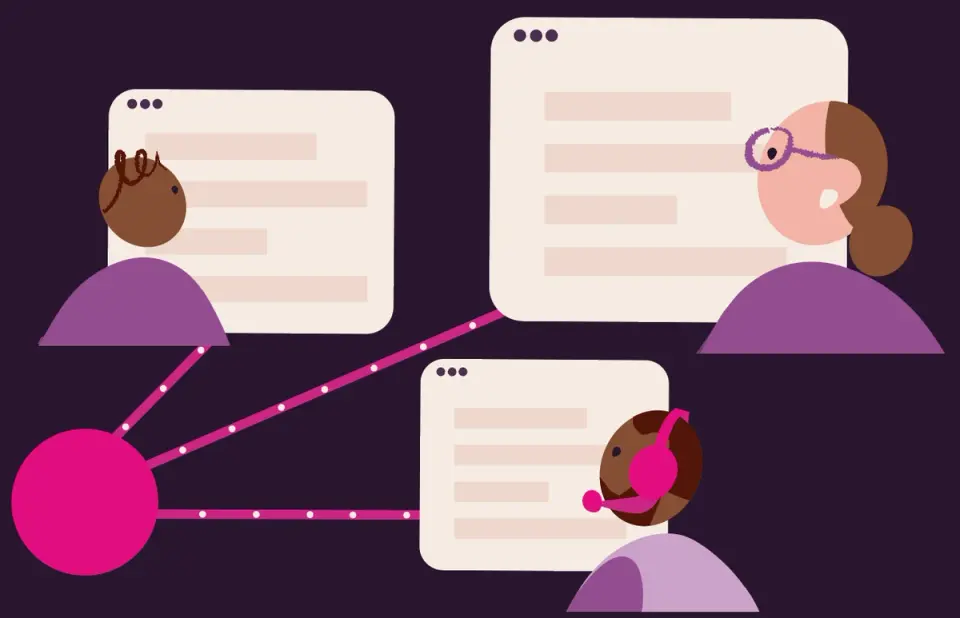
- Marketing and operations teams can see current offers in one place, so information aligns, speeding up Go-To-Market asset creation.
Case study: EDF
EDF previously found tariff implementation slow and arduous, especially as processes moved downstream:
"Previously, we had a team that created the prices and did the analysis. But then we had separate processes that actually involved external partners, which were focused on getting those prices into the system and checking them. It took two to three days to launch a price after all of that happened."
Adopting Kraken’s intuitive, unified operating system has rapidly sped up GTM: "Now, the process of getting prices in is really straightforward [and] we can launch a price change in a couple of hours… Already we've definitely launched more stuff in the last couple of years [with Kraken], than we had in the 20 years before [with our legacy IT]."
Today, products, pricing, eligibility and contract terms are defined and configured once in Kraken’s Product Studio and become the single commercial truth for everything downstream: quoting, contracting and billing.
Play 5: Improving experiences for customers and teams
What’s broken:
A convoluted product book creates more confusion for both customers *and* operations teams. Yet increased personalisation, smart devices, and broader tariff choice can also overwhelm.
A customer might not know…
- Whether a product best suits them, based on their usage behaviour
- What behavioural changes will make a certain product worth it
- Whether savings are guaranteed
- How smart devices factor into or change the equation
- How to interpret the bills they receive
Likewise, customer agents can also struggle to explain or recommend increasingly complex offers.
Reframing
Utilities shouldn’t aim to give every customer a bespoke tariff, but use personalized data and eligibility logic to help customers understand how smart tariffs benefit them, and how they are being .
What good looks like
- Customer are proactively shown a small number of offers relevant to them
- Customer recommendations should explain:
- Expected outcome (e.g. whether the customer will save money)
- Customer action required (e.g. contact us to sign-up)
- Risk or uncertainty (e.g. whether customers may see higher costs at peak times)
- Who the offer suits (e.g. whether an offer best suits customers with an EV)
- Standard tariffs should remain available
- Devices and timing should be automatically managed and optimized where possible
- Vulnerable customers are also protected from large risks
- Customers can leverage interactive, AI-powered tools to understand their tariff and their bills

Case Study: Octopus Energy
Octopus Energy UK trained a model on EV owners' interval usage data from Kraken, and used it to find other customers likely to own an EV. A personalized email to that group promoting Octopus's managed EV tariff (Intelligent Octopus Go) achieved a 27% conversion rate.
Case Study: EDF and Origin
EDF and Origin have built an AI-powered Bill Explainer tool on top of Kraken to help customers better understand their bills. In their pilot, EDF saw a 5.6% reduction in billing-related queries.
Conclusions
The future of tariff management lies, not in the rate itself, but in the value utilities can build around it. Standard tariffs aren’t disappearing: they’ll still be important for customers who value simplicity and predictability, but smart devices and bespoke offerings provide a unique opportunity to more holistically integrate tariffs with broader business aims. Combining smart devices, flexibility and automation creates opportunities to strengthen customer relationships, underpin mutually beneficial energy engagement, and open new revenue streams in the process.
Still, delivering these propositions depends on utilities having a single, reliable source of truth for tariffs. Next-generation tech can unlock the knowledge and tools to build and manage tariffs without engineering tickets and external parties, to streamline processes, and leverage powerful new AI capabilities. Thanks to the proliferation of unified operating systems like Kraken, leading utilities are doing exactly that today. For the sake of customers, utilities and the energy system as a whole – the tariff is changing for the better.